
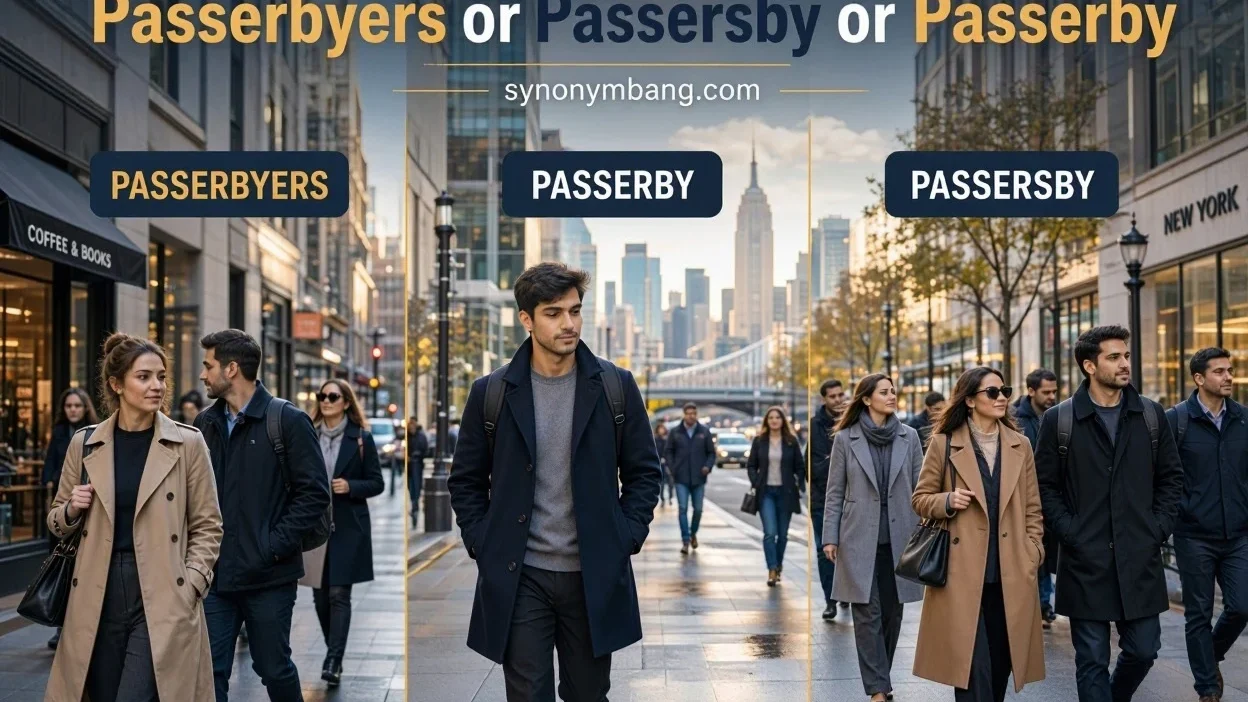
Choosing between passerbyers, passersby, and passerby can be confusing because the word passerby has an unusual plural form. Many English learners naturally add -s or -ers to make it plural, but this word follows a different pattern.
The correct singular form is passerby, which refers to one person walking or traveling past a particular place. The correct plural form is passersby, which refers to two or more people passing by. Passerbyers is incorrect and is not a standard English word.
Understanding the difference is important for writing clearly and using correct English grammar. if you are describing someone walking down a street, people watching an accident, or strangers passing a shop, choosing the right form makes your sentences sound natural. This guide explains the meanings, spelling rules, differences, and practical examples of all three forms.
Quick Answer
Passerby is the correct singular form, while passersby is its correct plural form. Passerbyers is incorrect. The plural changes passer to passers while keeping by unchanged because passerby is a compound noun whose main element is passer.
Why Do People Confuse Passerbyers, Passersby, and Passerby?
People often confuse these spellings because most English nouns form their plurals by adding -s or -es to the end.
For example:
- One passerby → Two passersby
- One passer → Two passers
- One bystander → Two bystanders
However, passerby is a compound noun. Its plural form places the plural ending on the main word, passer, rather than adding it to the end of the entire expression.
This unusual pattern leads some people to write passerbyers or passerby when they actually mean multiple people.
1. What Does Passerby Mean?
Passerby is a singular noun that describes one person who walks or travels past a particular place, usually without stopping.
It commonly refers to someone who happens to be nearby while something is happening.
Examples:
- A passerby stopped to help the injured cyclist.
- I asked a passerby for directions.
- The passerby noticed the broken window.
- A stranger approached a passerby outside the station.
When to use passerby:
Use passerby when you are talking about exactly one person moving past a location.
2. What Does Passersby Mean?
Passersby is the plural form of passerby. It refers to two or more people who walk or travel past a particular place.
It is commonly used when describing crowds, public places, streets, shops, and unexpected events.
Examples:
- Several passersby stopped to watch the performance.
- The street was crowded with passersby.
- Passersby noticed the unusual activity.
- A few passersby helped the injured man.
When to use passersby:
Use passersby when referring to more than one person passing a particular location.
3. What Does Passerbyers Mean?
Passerbyers is an incorrect spelling and is not recognized as a standard English plural form of passerby.
Some writers create this form by adding -ers to passerby, perhaps because they assume the word needs an additional plural ending.
However, English grammar does not use this spelling.
Incorrect: Several passerbyers stopped to help.
Correct: Several passersby stopped to help.
Remember that passersby is already the correct plural form. It does not need another ending.
Passerby vs. Passersby vs. Passerbyers: Comparison Table
| Word | Correct? | Meaning | Usage |
| Passerby | Yes | One person passing by | Singular |
| Passersby | Yes | Two or more people passing by | Plural |
| Passerbyers | No | Incorrect plural spelling | Avoid |
The main difference is grammatical number. Passerby describes one person, while passersby describes multiple people. Passerbyers is not a standard English spelling.
When Should You Use Passerby or Passersby?
Choosing between these two forms depends on how many people you are describing.
Use Passerby for One Person
Choose passerby when referring to a single individual walking or traveling past a location.
Examples:
- A passerby helped the older woman.
- The passerby asked what had happened.
- I noticed a passerby near the entrance.
Use Passersby for Multiple People
Choose passersby when referring to two or more individuals.
Examples:
- Several passersby gathered around the accident.
- Passersby watched the street performer.
- The shop attracted many passersby.
Avoid Passerbyers
Do not use passerbyers in formal or standard English writing.
Instead, use passersby whenever you need the plural form.
10+ Examples of Passerby and Passersby in Sentences
These examples show how to use both correct forms naturally.
Examples Using Passerby
- A passerby noticed smoke coming from the building.
- The passerby called emergency services.
- I asked a passerby where the nearest bus stop was.
- A friendly passerby helped me carry my bags.
- The passerby took a photograph of the accident.
- A passerby found the lost wallet on the sidewalk.
Examples Using Passersby
- Several passersby stopped to watch the street performance.
- The passersby helped the injured cyclist.
- Many passersby walked through the busy market.
- The shop displayed colorful signs to attract passersby.
- A group of passersby gathered near the entrance.
- The sudden noise surprised the passersby.
Common Mistakes When Using Passerby and Passersby
English learners and even experienced writers sometimes make mistakes with this compound noun.
Here are some common errors to avoid.
| Incorrect Usage | Correct Usage |
| Two passerby | Two passersby |
| Many passerby | Many passersby |
| Several passerbyers | Several passersby |
| One passersby | One passerby |
| A passerbyers stopped | A passerby stopped |
Remember these grammar rules:
- Use passerby for one person.
- Use passersby for multiple people.
- Never use passerbyers as the plural form.
- Use singular verbs with passerby and plural verbs with passersby.
For example:
- A passerby was walking down the street.
- Several passersby were walking down the street.
Memory Trick: How to Remember Passerby vs. Passersby
A simple way to remember the difference is to focus on the word passer.
- One passerby: One person passing by.
- Many passersby: Multiple people passing by.
Think of it this way:
Passer + by = Passerby
Passers + by = Passersby
The plural -s belongs to passer, not to the end of the entire word.
If you remember this pattern, you can avoid writing the incorrect form passerbyers.
American vs. British English: Passerby or Passersby
There is no major spelling difference between American and British English when using these words.
Both varieties use:
- Passerby as the singular form.
- Passersby as the plural form.
For example:
American English: A passerby stopped to help the driver.
British English: Several passersby stopped to help the driver.
The spelling and grammatical rules remain the same in both varieties. You can confidently use passerby and passersby in American and British English.
Similar Words to Passerby
Several English words have meanings similar to passerby. However, their meanings and usage can differ slightly.
| Word | Meaning |
| Bystander | A person who witnesses an event without directly participating |
| Pedestrian | A person traveling on foot |
| Onlooker | Someone who watches an event |
| Spectator | Someone who watches an activity or performance |
| Observer | Someone who watches or notices something |
| Stranger | A person who is unfamiliar or unknown |
| Walker | A person who walks |
| Passer | A person who passes a particular place |
These words are useful alternatives, but they are not always interchangeable.
For example, a pedestrian specifically travels on foot, while a passerby is someone who happens to pass a particular location. A bystander usually refers to someone witnessing an event.
Final Verdict: Passerbyers or Passersby or Passerby?
The correct choice depends on whether you are describing one person or multiple people.
- Passerby: Correct singular form for one person.
- Passersby: Correct plural form for two or more people.
- Passerbyers: Incorrect spelling that you should avoid.
If you are writing about one person walking past a location, use passerby. If you are describing several people, use passersby. Never use passerbyers as the plural form.
Frequently Asked Questions (FAQs)
1. Is it passerby or passersby?
Both are correct, but they have different grammatical uses. Passerby is singular and refers to one person, while passersby is plural and refers to two or more people.
2. Is passerbyers a real word?
No. Passerbyers is not a standard English word. The correct plural spelling is passersby.
3. What is the plural of passerby?
The plural of passerby is passersby. The plural ending is added to passer, not to the end of the compound noun.
4. Is it two passerby or two passersby?
The correct expression is two passersby because the number two indicates more than one person. Using two passerby is grammatically incorrect.
5. Is passerby one word or two words?
Passerby is written as one word. It is a compound noun formed from passer and by.
6. What is another word for passerby?
Common alternatives include bystander, pedestrian, onlooker, and observer. The best alternative depends on the context and the person’s role.
7. Is passersby singular or plural?
Passersby is plural. It describes two or more people walking or traveling past a particular place. Its singular form is passerby.
Remember This
- Passerby = One person.
- Passersby = Two or more people.
- Passerbyers = Incorrect spelling.
The plural form of passerby is passersby, not passerbyers.
Conclusion
Understanding the difference between passerby, passersby, and passerbyers is simple once you learn how this compound noun forms its plural. Use passerby when talking about one person and passersby when referring to multiple people. The spelling passerbyers is incorrect and should be avoided in standard English.
if you are writing an essay, preparing an assignment, or improving your everyday vocabulary, using the correct form will make your English clearer and more natural. Remember the simple rule: one passerby, many passersby.

Hi, I’m Nathan Cooper, a language enthusiast passionate about synonyms and vocabulary. I create clear, accurate, and engaging content that helps readers expand their word knowledge and communicate with confidence every day.