
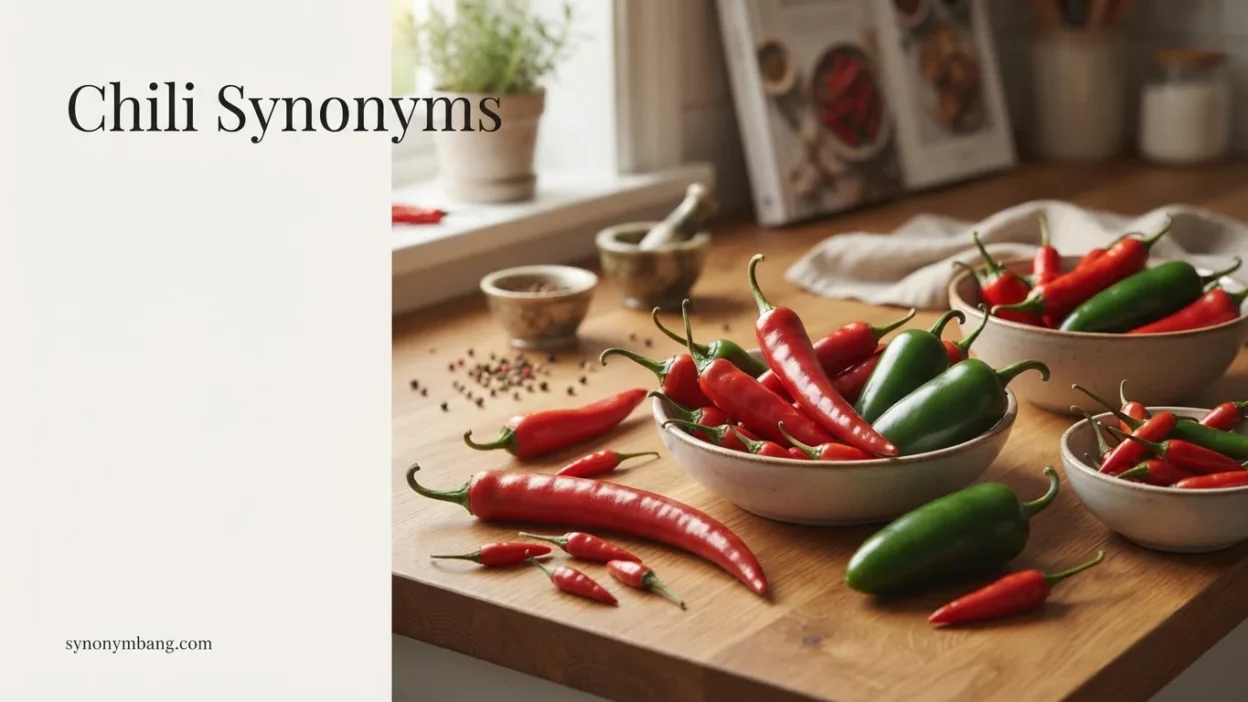
If you are searching for chili synonyms, the right word depends on what you mean by “chili.” In American English, chili can refer to a spicy pepper, a spicy flavor, or a hearty dish made with ingredients such as meat, beans, tomatoes, and spices. Because the word has several meanings, its synonyms also change with context.
Understanding related words can help students, ESL learners, writers, and content creators choose more precise vocabulary. For example, pepper may work when talking about the plant or fruit, while spice may describe its flavor. For the dish, words such as stew or chili con carne may be more appropriate.
What Does Chili Mean?
Chili is commonly used to describe a hot, spicy pepper or a dish prepared with chili peppers and other ingredients. The spelling chili is especially common in American English, while chilli is widely used in British English and many other varieties of English.
The exact meaning depends on the sentence. “Add a chili to the sauce” refers to a pepper, while “We had chili for dinner” usually refers to the cooked dish.
30 Chili Synonyms and Related Words
Because chili has multiple meanings, the following words are related synonyms or context-specific alternatives rather than perfect replacements in every sentence.
1. Pepper
Meaning: A plant or fruit that can have a spicy taste.
Example: She added a red pepper to the soup.
Best usage: General descriptions of chili peppers.
2. Hot Pepper
Meaning: A pepper with a strong, spicy flavor.
Example: Be careful when cutting the hot pepper.
Best usage: Clear, everyday descriptions.
3. Hot Chili
Meaning: A chili pepper with noticeable heat.
Example: This hot chili gives the sauce a strong kick.
Best usage: Food descriptions.
4. Capsicum
Meaning: A botanical term used for peppers belonging to the Capsicum genus.
Example: Chili peppers belong to the Capsicum family.
Best usage: Scientific or formal writing.
5. Cayenne
Meaning: A type of red chili pepper known for its heat.
Example: Sprinkle a little cayenne into the sauce.
Best usage: Cooking and spice descriptions.
6. Jalapeño
Meaning: A medium-hot green or red chili pepper.
Example: He sliced a jalapeño for the tacos.
Best usage: Specific food references.
7. Habanero
Meaning: A very hot variety of chili pepper.
Example: The habanero made the salsa extremely spicy.
Best usage: Referring to a specific hot pepper.
8. Serrano
Meaning: A small, relatively hot green or red chili pepper.
Example: The recipe calls for two serrano peppers.
Best usage: Mexican cuisine and recipes.
9. Peppercorn
Meaning: A dried fruit used as a spice, usually from the black pepper plant.
Example: The chef crushed several peppercorns for the sauce.
Best usage: Spice discussions; not a direct synonym for chili.
10. Spice
Meaning: A substance used to add flavor, especially heat or aroma, to food.
Example: Chili is an important spice in many dishes.
Best usage: Talking about chili as a seasoning.
11. Seasoning
Meaning: An ingredient added to food to improve its flavor.
Example: Add the chili seasoning before serving.
Best usage: Recipes and cooking instructions.
12. Heat
Meaning: The spicy sensation produced by chili peppers.
Example: This sauce has a surprising amount of heat.
Best usage: Describing spiciness rather than the pepper itself.
13. Spiciness
Meaning: The quality of being hot or spicy.
Example: You can reduce the spiciness by removing the seeds.
Best usage: Food reviews and descriptions.
14. Pungency
Meaning: A strong, sharp, or intense taste or smell.
Example: The pungency of the chili was noticeable immediately.
Best usage: Formal or descriptive writing.
15. Zest
Meaning: An exciting or lively quality; in food, it can describe a sharp flavor.
Example: The chili added zest to the otherwise mild dish.
Best usage: Creative food writing.
16. Kick
Meaning: A strong spicy effect or burst of flavor.
Example: The fresh chili gives the curry an extra kick.
Best usage: Casual and conversational writing.
17. Fire
Meaning: Informal language for intense spiciness.
Example: That chili sauce is pure fire.
Best usage: Informal food descriptions.
18. Hotness
Meaning: The degree of heat or spiciness in food.
Example: The hotness of the chili varies by variety.
Best usage: Simple explanations and food discussions.
19. Spicy
Meaning: Having a strong, hot flavor.
Example: She ordered a spicy chili sauce.
Best usage: Describing food rather than naming the ingredient.
20. Hot
Meaning: Having a strong spicy sensation.
Example: These peppers are extremely hot.
Best usage: Everyday conversation.
21. Chili Pepper
Meaning: A pepper containing natural compounds that create a hot sensation.
Example: He chopped a fresh chili pepper for the salsa.
Best usage: When you want to make the meaning of chili completely clear.
22. Red Pepper
Meaning: A red-colored pepper; depending on context, it can refer to a red chili pepper.
Example: Add one red pepper for extra heat.
Best usage: Cooking, although the term can also refer to sweet peppers.
23. Hot Sauce
Meaning: A liquid sauce made with chili peppers and other ingredients.
Example: She added hot sauce to her eggs.
Best usage: Sauces and condiments.
24. Chili Sauce
Meaning: A sauce made primarily with chili peppers and other ingredients.
Example: The restaurant serves homemade chili sauce.
Best usage: Food and restaurant descriptions.
25. Chili Powder
Meaning: Dried and ground chili peppers, or a spice blend containing chili peppers.
Example: Add one teaspoon of chili powder.
Best usage: Recipes and cooking instructions.
26. Chili Flakes
Meaning: Small pieces of dried chili peppers.
Example: Sprinkle chili flakes over the pizza.
Best usage: Toppings and seasoning.
27. Chili Con Carne
Meaning: A spicy dish traditionally made with meat, chili peppers, and other ingredients.
Example: We prepared chili con carne for dinner.
Best usage: Referring specifically to the cooked dish.
28. Stew
Meaning: A dish made by slowly cooking ingredients in liquid.
Example: The chili was served like a thick, hearty stew.
Best usage: Describing the texture or style of chili; not an exact synonym.
29. Hotpot
Meaning: A cooked dish containing various ingredients prepared together in a pot.
Example: The spicy hotpot was filled with vegetables and peppers.
Best usage: Certain dishes and regional cuisines; not a direct synonym.
30. Peppery
Meaning: Having a sharp or spicy taste similar to pepper.
Example: The soup had a strong, peppery flavor.
Best usage: Describing taste rather than naming chili itself.
Chili Synonyms Comparison Guide
| Word | Main Meaning | Best Context |
| Pepper | A pepper fruit or plant | Everyday writing |
| Hot pepper | Spicy pepper | General descriptions |
| Capsicum | Botanical term | Scientific writing |
| Cayenne | Specific chili variety | Cooking |
| Jalapeño | Specific chili variety | Mexican food |
| Habanero | Very hot pepper | Strong heat |
| Spice | Flavoring ingredient | Cooking |
| Heat | Spicy sensation | Food descriptions |
| Spiciness | Degree of heat | Reviews and explanations |
| Kick | Strong spicy effect | Casual writing |
| Hot sauce | Liquid chili condiment | Food and recipes |
| Chili powder | Ground chili seasoning | Cooking |
| Chili flakes | Dried chili pieces | Toppings |
| Chili con carne | Chili-based dish | Meals and recipes |
| Stew | Thick cooked dish | Describing the dish |
How to Choose the Right Chili Synonym
For the Pepper Itself
Use pepper, hot pepper, chili pepper, or capsicum when you mean the actual plant or fruit.
- Everyday: pepper
- Clearly spicy: hot pepper
- Very specific: chili pepper
- Scientific: capsicum
For Specific Varieties
Use names such as jalapeño, habanero, serrano, or cayenne when you know which type of chili you mean.
This makes your writing more precise because these words identify particular varieties rather than peppers in general.
For Spicy Flavor
Use heat, spiciness, hotness, kick, or pungency when you are describing the sensation created by chili.
For example:
- “The sauce has intense heat.”
- “The curry has mild spiciness.”
- “The peppers give the dish an extra kick.”
For Cooking and Recipes
Words such as chili powder, chili flakes, chili sauce, and hot sauce are useful when discussing prepared chili ingredients.
These terms should not normally replace chili because they describe different forms of the ingredient.
For the Cooked Dish
When chili means the meal, context matters. Chili con carne can refer to a particular chili-based dish, while stew may describe its consistency or cooking style rather than being a true synonym.
Chili vs. Chilli
The words chili and chilli generally refer to the same type of spicy pepper, but spelling preferences differ by region.
Chili is especially common in American English. Chilli is common in British English and several other English varieties.
There is also a difference between the pepper and the dish in some contexts. In American English, chili can mean both a chili pepper and the popular cooked dish.
Are Chili and Pepper Synonyms?
Sometimes, but not always.
Chili is a type of pepper, while pepper is a broader term. Some peppers are sweet and mild, while chili peppers are generally associated with heat.
Therefore, replacing chili with pepper can make a sentence less specific.
Are Chili and Spice Synonyms?
Not exactly.
A chili can be used as a spice or seasoning, but spice is a much broader category. Cinnamon, cumin, paprika, and turmeric are also spices.
So, spice can work when discussing chili’s role in cooking, but it is not a precise replacement for chili.
Common Mistakes When Using Chili Synonyms
One common mistake is treating every related word as an exact synonym. A jalapeño, for example, is a particular type of chili, while chili can refer to many varieties.
Another mistake is confusing the pepper with the sensation it creates. Heat and spiciness describe the experience of eating chili, not the pepper itself.
It is also important to consider regional spelling. If you are writing for an American audience, chili is usually the preferred spelling. For British audiences, chilli is common.
Final Takeaway
The best chili synonyms depend on what you are trying to describe. If you mean the pepper, words such as pepper, hot pepper, capsicum, cayenne, jalapeño, and habanero can provide greater specificity. If you mean the flavor, heat, spiciness, pungency, and kick may be more suitable.
For recipes, terms such as chili powder, chili flakes, chili sauce, and hot sauce help describe different forms of the ingredient. Choosing the right related word makes your writing clearer, more natural, and more precise.

I’m Grace Walker, the Administrator at SynonymBang. I manage daily operations, ensure content quality, support our editorial team, and strive to provide reliable synonym resources that help readers communicate with confidence.