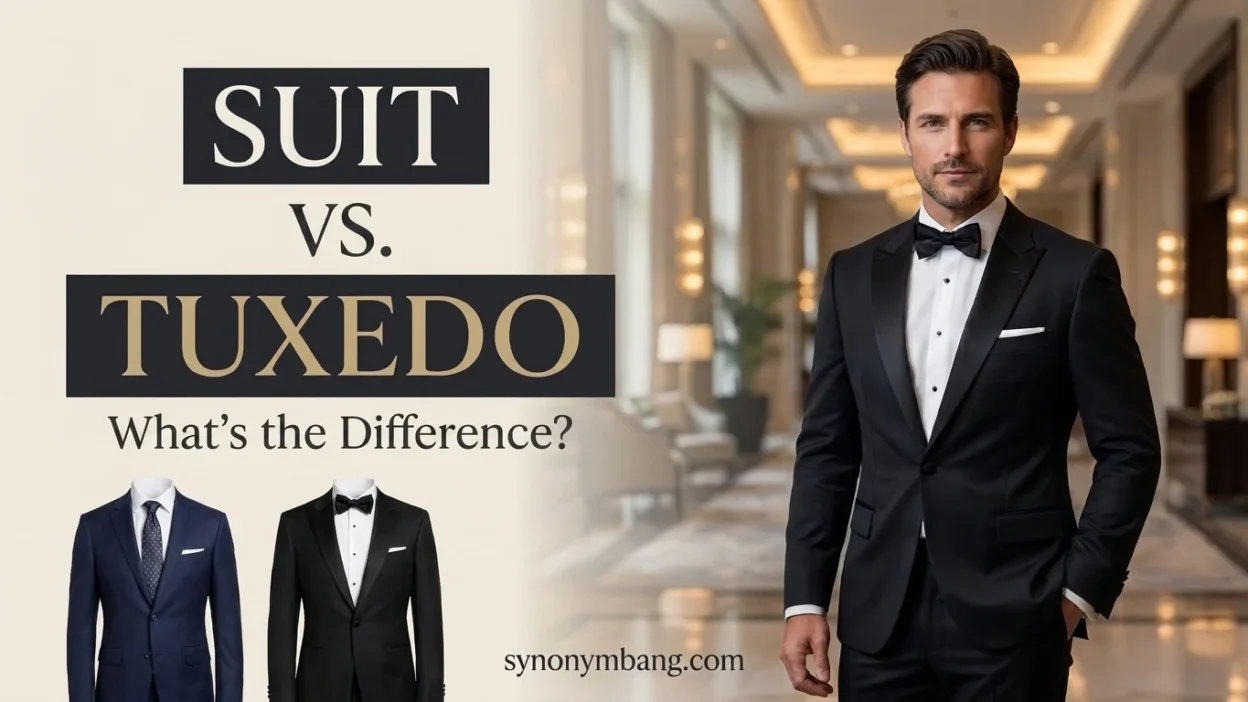
Choosing between a suit and a tuxedo can be confusing, especially when preparing for a wedding, business event, formal dinner, or special celebration. Although both outfits feature a matching jacket and trousers, they differ in their design, accessories, formality, and traditional occasions. Knowing these differences helps you select the right outfit without looking underdressed or overdressed.
The biggest difference between a suit vs. tuxedo is the use of satin details. A traditional tuxedo features satin-faced lapels, satin-covered buttons, and a satin stripe along the outer trouser seams. A regular suit generally uses the same fabric throughout the jacket and trousers.
Suits offer greater versatility for professional and social occasions, while tuxedos are traditionally reserved for black-tie events and formal evening celebrations. if you are choosing a wedding suit, shopping for men’s formal wear, or preparing for a black-tie invitation, understanding these differences makes the decision easier.
Quick Answer: Suit vs. Tuxedo
A suit is a matching jacket and trousers made from the same fabric, usually without satin decorations. It is suitable for business meetings, interviews, weddings, and social occasions. A tuxedo is a more formal evening outfit featuring satin lapels, buttons, and trouser stripes. It is traditionally worn for black-tie events.
Why Do People Confuse Suit and Tuxedo?
People often confuse a suit and a tuxedo because both outfits have matching jackets and trousers and create an elegant appearance. Black suits and black tuxedos can look especially similar from a distance.
However, their construction and traditional purposes are different.
Here are the main reasons people mix them up:
- Similar appearance: Both feature tailored jackets and matching trousers.
- Formal clothing: Both are associated with weddings, celebrations, and professional occasions.
- Similar colors: Black, navy blue, and other dark shades are popular choices for both.
- Matching accessories: Both can be worn with dress shirts, formal shoes, and pocket squares.
- Different dress codes: Many people do not realize that a tuxedo is traditionally associated with black-tie events, while a suit works for a wider range of occasions.
The easiest way to identify a tuxedo is to examine its lapels and trousers. Satin details are the most recognizable features of traditional tuxedo styling.
What Is a Suit?
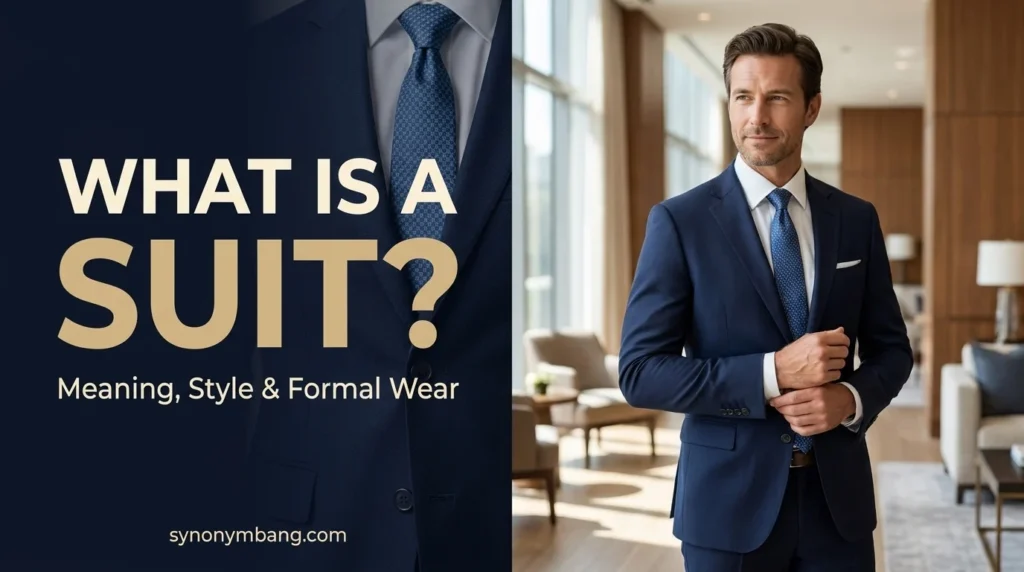
A suit is a coordinated outfit consisting of a jacket and trousers made from matching fabric. It may also include a matching waistcoat, creating what is known as a three-piece suit.
Suits are among the most versatile options in men’s formal clothing. They come in different colors, patterns, fabrics, and fits, making them suitable for professional environments and social occasions.
Unlike a traditional tuxedo, a regular suit generally does not have satin-faced lapels or satin stripes along the trousers.
Common Features of a Suit
- Matching fabric: The jacket and trousers are generally made from the same material.
- Standard lapels: Notch, peak, and shawl lapels are available, usually made from the jacket’s main fabric.
- Different colors: Popular choices include black, navy, charcoal, grey, brown, and beige.
- Flexible neckwear: Suits can be styled with neckties, bow ties, or open collars, depending on the occasion.
- Various fabrics: Wool, cotton, linen, and blended materials are commonly used.
- Different fits: Slim-fit, regular-fit, and tailored-fit options offer different silhouettes.
When Should You Wear a Suit?
A suit is appropriate for many professional and social occasions, including:
- Business meetings and office environments
- Job interviews and professional presentations
- Daytime and semi-formal weddings
- Graduation ceremonies
- Cocktail parties and social gatherings
- Professional conferences
- Formal dinners that do not require black tie
Example: He wore a navy blue suit to his job interview.
This example shows how a suit can create a polished and professional appearance.
What Is a Tuxedo?
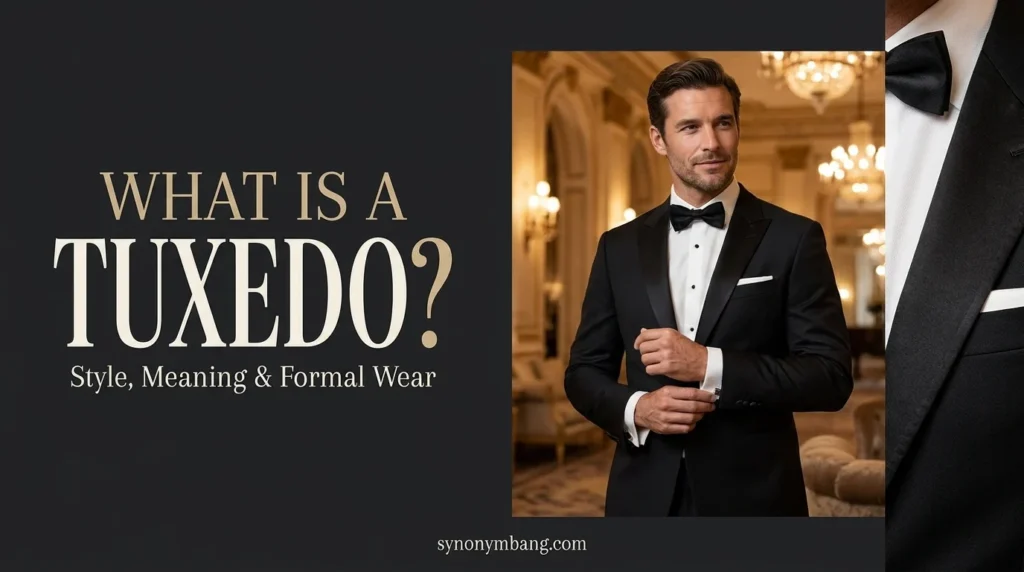
A tuxedo is a formal evening outfit traditionally designed for black-tie occasions and special celebrations. It usually consists of a matching jacket and trousers featuring distinctive satin or similar contrasting fabric details.
The most recognizable feature is the satin trim. The jacket typically has satin-faced lapels and satin-covered buttons, while the trousers feature a satin stripe running down the outer seams.
A traditional tuxedo is paired with a white formal shirt, a black bow tie, and polished black dress shoes.
Common Features of a Tuxedo
- Satin lapels: The lapels usually have a shiny satin finish, commonly in peak or shawl styles.
- Satin-covered buttons: These buttons match the lapel detailing.
- Satin trouser stripe: A decorative stripe runs along the outer seam of each trouser leg.
- Formal shirt: A white tuxedo shirt with French cuffs and a suitable collar is traditional.
- Bow tie: A black bow tie is the classic accessory for black-tie dressing.
- Formal footwear: Patent leather Oxfords or highly polished black dress shoes complete the outfit.
- Evening styling: Tuxedos are traditionally designed for formal evening occasions.
When Should You Wear a Tuxedo?
A tuxedo is appropriate for occasions that require traditional formal evening wear, such as:
- Black-tie weddings
- Formal evening receptions
- Charity galas and award ceremonies
- Formal balls and celebrations
- Opera premieres and prestigious dinners
- Proms with a formal dress code
- Events specifically requesting black-tie attire
Example: He wore a black tuxedo to the evening wedding reception.
This example describes an outfit suitable for a formal evening celebration.
Suit vs. Tuxedo: What Are the Main Differences?
Although suits and tuxedos share a similar basic design, their details, accessories, and traditional dress codes set them apart.
| Feature | Suit | Tuxedo |
| Formality | Business to formal | Traditional black-tie formal |
| Jacket fabric | Usually consistent throughout | Often features satin details |
| Lapels | Usually self-fabric | Satin-faced |
| Buttons | Standard or fabric-covered | Traditionally satin-covered |
| Trousers | No satin side stripe | Satin side stripe |
| Neckwear | Necktie, bow tie, or no tie | Traditionally black bow tie |
| Shirt | Regular dress shirt | Formal tuxedo shirt |
| Shoes | Oxfords, Derbies, loafers | Patent leather or polished black shoes |
| Accessories | Belt, tie, pocket square | Cufflinks, bow tie, cummerbund or waistcoat |
| Occasions | Work, interviews, weddings, social events | Black-tie weddings, galas, formal evenings |
| Versatility | Highly versatile | More occasion-specific |
The easiest distinction: A traditional tuxedo has satin details on its lapels and trousers, while a regular suit generally uses the same fabric throughout.
Jacket Lapels: Satin vs. Self-Fabric
One of the quickest ways to recognize the difference is by examining the jacket lapels.
A tuxedo jacket typically features satin-faced lapels in peak or shawl styles. Their shiny finish contrasts with the main jacket fabric and creates a traditional formal appearance.
A suit jacket generally has lapels made from the same fabric as the rest of the jacket. Common styles include notch, peak, and shawl lapels.
Trousers: Satin Stripe vs. Plain Fabric
Traditional tuxedo trousers feature a satin stripe or braid running down the outer leg seams. They are commonly designed with side adjusters or suspender buttons rather than a traditional belt.
Regular suit trousers do not have this satin stripe. They often include belt loops and can be styled with different types of footwear.
Accessories: Bow Tie vs. Necktie
A traditional tuxedo is paired with a black bow tie, which is an essential part of classic black-tie styling.
A suit offers more flexibility. You can wear a necktie, bow tie, or open collar depending on the dress code.
Shirts and Shoes
A tuxedo traditionally requires a white formal dress shirt, often featuring French cuffs, cufflinks, and a wingtip or turndown collar.
A suit works with a wider range of dress shirts, including different colors, patterns, and collar styles.
For footwear, tuxedos traditionally pair with patent leather Oxfords or polished black dress shoes. Suits offer more choices, including Oxfords, Derbies, monk straps, and loafers.
Dress Code Decision Guide: Should You Wear a Suit or Tuxedo?
Not sure which outfit to choose? The invitation’s dress code is usually the best guide.
| Dress Code | What Should You Wear? |
| White tie | Tailcoat, white waistcoat, and white bow tie |
| Black tie | Tuxedo with black bow tie |
| Black-tie optional | Tuxedo preferred; dark suit acceptable |
| Formal or lounge suit | Dark suit with a dress shirt and tie |
| Cocktail attire | Dark suit, with a tie optional depending on the event |
| Business formal | Professional suit with a dress shirt and tie |
| Business casual | Suit without a tie or blazer with chinos |
| Smart casual | Blazer, tailored trousers, or smart separates |
What If the Invitation Says Black Tie?
Choose a tuxedo. A traditional black-tie dress code specifically calls for a tuxedo with a black bow tie and formal shoes.
What If It Says Black-Tie Optional?
You can wear either a tuxedo or a dark, well-fitted suit with a tie. A tuxedo is preferred, but a suit is generally acceptable.
What If It Says Cocktail Attire?
A dark suit is usually the safest choice. You can add a pocket square, polished shoes, and a necktie for a refined appearance.
What If There Is No Dress Code?
Consider the location, time, and nature of the event. A suit is usually the more versatile option because it works for many occasions without appearing excessively formal.
Important: White tie and black tie are different dress codes. A traditional tuxedo is appropriate for black tie, while white tie requires a tailcoat and specific accessories.
When to Wear a Suit
Suits are suitable for a wide range of professional, formal, and semi-formal occasions.
1. Business and Professional Settings
A well-fitted navy, grey, or charcoal business suit is a classic choice for office environments, meetings, interviews, and conferences.
Pair it with a light-colored dress shirt, a suitable necktie, and leather dress shoes for a professional appearance.
2. Semi-Formal and Cocktail Events
A suit is generally the right choice for cocktail parties and many semi-formal gatherings.
A navy or charcoal suit with a pocket square and polished shoes creates a stylish appearance without the extra formality of a tuxedo.
3. Casual and Daytime Weddings
Daytime ceremonies, garden weddings, and beach celebrations often call for a suit rather than a tuxedo.
Consider lighter fabrics such as linen, cotton blends, or lightweight wool. Colors such as beige, light grey, tan, and soft blue work particularly well for daytime events.
When to Wear a Tuxedo
Tuxedos are designed for special occasions where traditional evening formality is expected.
1. Black-Tie Events and Galas
A black-tie invitation means a tuxedo is the traditional choice. Charity galas, award ceremonies, opera premieres, and formal dinners commonly follow this dress code.
A classic black or midnight-blue tuxedo with a white shirt and black bow tie creates a timeless appearance.
2. Formal Weddings
A tuxedo is an excellent choice for an evening wedding with a black-tie dress code.
The groom, groomsmen, and guests can wear coordinated tuxedos to create a consistent formal look. However, always follow the wedding invitation’s dress requirements.
3. Prom and Formal School Events
A tuxedo is a popular choice for prom when the event calls for formal attire. Satin lapels, a bow tie, and polished shoes create a traditional evening look.
If the dress code is less formal, a dark suit can be an equally stylish and more versatile alternative.
15 Examples of Suit and Tuxedo in Sentences
These examples show how to use suit and tuxedo correctly in everyday English.
Examples Using Suit
- He purchased a navy suit for his upcoming job interview.
- My brother wore a grey suit to the wedding.
- She helped her husband choose a stylish suit for the business meeting.
- A well-fitted suit can create a professional appearance.
- He prefers wearing a charcoal suit to formal office events.
- The groom chose a three-piece suit for his wedding ceremony.
Using Examples Tuxedo
- He rented a black tuxedo for the formal reception.
- The invitation requested that guests wear a tuxedo.
- My father looked elegant in his midnight-blue tuxedo.
- The actor wore a classic tuxedo to the award ceremony.
- A black bow tie is a traditional accessory for a tuxedo.
- He bought a new tuxedo for the annual charity gala.
Examples Comparing Suit and Tuxedo
- A suit is more versatile than a traditional tuxedo.
- He wore a suit to the daytime wedding and a tuxedo to the evening gala.
- Both a suit and a tuxedo can create an elegant appearance.
Should You Rent or Buy a Tuxedo?
Whether you should rent or buy a tuxedo depends on how frequently you attend formal events, your budget, and your preference for fit.
When Renting Makes Sense
Renting is a practical option if you need a tuxedo for a single occasion or rarely attend black-tie events.
Advantages include:
- Lower upfront expense.
- No need for long-term storage.
- Access to formal styles for special occasions.
- A convenient option when your size or style preferences may change.
However, rental outfits may offer fewer fitting options, and availability can vary.
When Buying Makes Sense
Buying a tuxedo may be worthwhile if you regularly attend formal events or want an outfit that fits your preferences.
Advantages include:
- A more personalized fit.
- Greater control over fabric, color, and lapel style.
- Repeated use for future events.
- No need to arrange a rental every time.
A useful rule is to compare the purchase cost with the total cost of renting it for the number of events you expect to attend. There is no universal number of annual wears that makes buying automatically cheaper.
For an ordinary business wardrobe, investing in a versatile suit often provides more opportunities for use.
Styling Tips: How to Wear a Suit or Tuxedo
Choosing the right outfit is only part of looking well-dressed. Proper fit, colors, fabrics, and accessories also matter.
Getting the Fit Right
A well-fitted outfit looks more polished than an expensive garment with poor tailoring.
For both suits and tuxedos:
- The jacket shoulders should align with your natural shoulders.
- The jacket should button comfortably without pulling.
- The sleeves should show a small amount of shirt cuff.
- The trousers should fall neatly over the shoes.
- The overall silhouette should look balanced.
A visit to a tailor can improve the appearance of an off-the-rack suit or tuxedo.
Coordinating Colors and Patterns
For a traditional tuxedo, black and midnight blue are timeless options. Pair either color with a white shirt and black bow tie.
A suit offers greater freedom to experiment with colors and patterns. Navy, grey, charcoal, brown, and lighter shades can all work depending on the occasion.
For a classic combination, try a navy suit with a light-blue shirt and a complementary tie.
Choosing the Right Accessories
Traditional tuxedo accessories:
- Black bow tie
- White pocket square
- Formal cufflinks
- Black patent leather shoes
- Cummerbund or low-cut waistcoat
- Suspenders or trouser side adjusters
Traditional suit accessories:
- Necktie or bow tie
- Pocket square
- Leather belt
- Dress watch
- Oxfords, Derbies, or loafers
One important rule: traditional tuxedo trousers are designed to be worn without a belt. Side adjusters or suspenders maintain their clean appearance.
Common Mistakes to Avoid
Even people familiar with formal clothing sometimes make mistakes when choosing or styling suits and tuxedos.
1. Assuming Every Black Suit Is a Tuxedo
A black suit is not automatically a tuxedo. Traditional tuxedos feature satin-faced lapels and a satin stripe along the trousers.
2. Wearing a Suit to a Strict Black-Tie Event
A regular business suit does not meet the traditional black-tie dress code. Choose a tuxedo unless the invitation provides another option.
3. Wearing a Tuxedo to Every Formal Occasion
Not every formal event requires a tuxedo. Business meetings, daytime weddings, and many cocktail events are better suited to a regular suit.
4. Wearing a Belt With a Traditional Tuxedo
A belt interrupts the clean appearance of traditional tuxedo trousers. Use side adjusters or suspenders instead.
5. Ignoring the Event’s Dress Code
Always read the invitation before selecting your outfit. The correct choice depends more on the dress code than on personal preference.
6. Choosing the Wrong Fit
Baggy shoulders, overly long sleeves, and loose trousers can make even an expensive outfit look poorly fitted. Proper tailoring makes a significant difference.
7. Assuming Tuxedos Only Come in Black
Black is the traditional choice, but midnight blue and other colors are also available. Velvet and textured options can work for certain formal occasions, although classic black-tie conventions still favor traditional styling.
Memory Trick: How to Remember Suit vs. Tuxedo
An easy way to remember the difference is to connect each word with its traditional purpose.
- Suit = Versatility: Think of business meetings, interviews, weddings, and professional dressing.
- Tuxedo = Black Tie: Think of satin lapels, bow ties, and formal evening celebrations.
Remember this simple rule: A suit is for many occasions, but a tuxedo is traditionally for black-tie events.
American vs. British English: Suit and Tuxedo
The words suit and tuxedo are used in both American and British English, but formal evening clothing has different traditional names.
In American English, the word tuxedo commonly describes a formal evening outfit featuring satin details.
In British English, the equivalent outfit is traditionally called a dinner suit. The term dinner jacket refers specifically to the jacket.
| American English | British English |
| Tuxedo | Dinner suit |
| Tuxedo jacket | Dinner jacket |
| Black-tie event | Black-tie event |
| Suit | Suit |
Examples:
- American English: He wore a black tuxedo to the gala.
- British English: He wore a black dinner suit to the gala.
Both expressions refer to essentially the same traditional formal evening outfit.
Similar Words Related to Suit and Tuxedo
Understanding related clothing terms can help you distinguish between different types of men’s formal wear.
- Dinner Suit: The British English term for a traditional tuxedo.
- Dinner Jacket: A formal evening jacket worn with matching dinner trousers.
- Three-Piece Suit: A matching jacket, trousers, and waistcoat.
- Business Suit: A professional outfit designed for workplace and business occasions.
- Lounge Suit: A traditional term for a standard matching jacket and trousers, commonly worn for business or formal daytime occasions.
- Blazer: A standalone smart jacket that does not necessarily come with matching trousers.
- Waistcoat: A sleeveless garment worn over a shirt, often as part of a three-piece suit.
- Formal Wear: Clothing intended for special occasions and specific dress codes.
- Black Tie: A formal evening dress code that traditionally requires a tuxedo.
- White Tie: A highly formal dress code requiring a tailcoat, white waistcoat, and white bow tie.
Final Verdict: Should You Choose a Suit or Tuxedo?
The choice between a suit and a tuxedo depends on the occasion, dress code, and level of formality.
Choose a suit for business meetings, job interviews, daytime weddings, cocktail parties, and most professional or social gatherings. It offers greater flexibility in colors, fabrics, accessories, and styling.
Choose a tuxedo for black-tie weddings, formal galas, award ceremonies, and special evening celebrations. Its satin details, traditional bow tie, and polished accessories create a distinctive formal appearance.
Neither outfit is universally better. A suit is more versatile, while a tuxedo is the traditional choice for black-tie occasions. Always check the invitation and select an outfit that fits the event.
Frequently Asked Questions (FAQs)
1. What is the main difference between a suit and a tuxedo?
The main difference is the satin detailing and traditional level of formality. A tuxedo typically features satin-faced lapels, satin-covered buttons, and a satin stripe along the trouser seams. A regular suit generally uses the same fabric throughout the jacket and trousers.
2. Is a tuxedo the same as a suit?
Not exactly. A tuxedo is a specialized type of formal suit with distinctive satin details and traditional black-tie styling. A regular suit does not usually have these features. In simple terms, a tuxedo belongs to the broader suit family, but not every suit is a tuxedo.
3. Is a tux just a black suit?
No. A black suit and a black tuxedo may look similar, but they are different garments. A traditional tuxedo has satin-faced lapels and a satin trouser stripe, while a regular black suit generally has matching fabric throughout.
4. Is a tuxedo more formal than a suit?
Yes. Traditionally, a tuxedo is more formal than an ordinary business or lounge suit. It is designed primarily for black-tie evening events, while suits are appropriate for a wider range of professional and social occasions.
5. Can I wear a suit to a black-tie event?
A traditional black-tie dress code calls for a tuxedo. However, if the invitation says black-tie optional, a dark suit with a tie is generally acceptable. Always follow the specific dress code.
6. What is the difference between a dinner jacket and a tuxedo?
In common usage, they refer to the same style of formal evening clothing. Tuxedo is the usual American term, while dinner jacket and dinner suit are traditional British terms. Strictly speaking, a dinner jacket refers to the jacket rather than the complete outfit.
7. Can you wear a tuxedo to a wedding?
Yes. A tuxedo is appropriate for an evening wedding with a black-tie dress code. For daytime, casual, or semi-formal weddings, a well-fitted suit is generally a better choice.
8. Should you rent or buy a tuxedo?
Renting is practical if you need a tuxedo for a single event or rarely attend black-tie occasions. Buying may be more economical if you attend formal events regularly and want a personalized fit.
Remember This
- Suit: A versatile matching jacket and trousers suitable for business, weddings, and social occasions.
- Tuxedo: A traditional formal evening outfit featuring satin details.
- Black tie: Traditionally requires a tuxedo and black bow tie.
- Black-tie optional: Allows a tuxedo or an appropriate dark suit.
- American English: Tuxedo.
- British English: Dinner suit.
- Main difference: Satin details distinguish a traditional tuxedo from a regular suit.
Conclusion
Understanding suit vs. tuxedo makes choosing the right formal outfit much easier. Although both garments feature matching jackets and trousers, their details and traditional purposes are different. A suit offers versatility for business meetings, interviews, daytime weddings, and social occasions, while a tuxedo provides the classic appearance expected at black-tie events and formal evening celebrations.
Before choosing your outfit, check the dress code, consider the occasion, and pay attention to fit and accessories. Whether you prefer a classic men’s suit or an elegant black tuxedo, the right choice will help you look confident, comfortable, and appropriately dressed.

Hello, I’m Isabella Collins, a language enthusiast passionate about helping readers discover accurate synonyms and enrich their vocabulary. I create clear, practical content that makes English writing easier, stronger, and more expressive.